 Safety
New research released by EE delivers a stark message to parents, platforms, and policymakers alike: nearly half of secondary school children say they know how to hide their online activity from their parents, and 30% openly admit their parents have “no idea” what they do online. This is not fringe behavior. It is mainstream digital fluency.
The study documents what many families already sense but struggle to articulate. Teens are using disguised calculator apps, disappearing messages, secondary profiles, coded emojis, fake folders, and even biometric workarounds to bypass parental controls and conceal behavior. These are not isolated tricks—they are shared tactics, normalized through peer culture and reinforced by the design of modern platforms. Importantly, the research also dispels a common myth: this is not primarily about rebellion. A significant number of children say they want more independence and fewer family conflicts—and many acknowledge that greater honesty would help. Nearly 40% even agree that confiscation is fair when agreed-upon rules are broken. The real issue exposed by this research is structural.
Parental control tools are built on visibility. Today’s teen digital behavior is built on invisibility. When safety relies on parents seeing messages, reviewing apps, or accessing logs, it fails the moment activity moves into disappearing chats, coded language, or hidden environments. By the time an adult becomes aware, the opportunity for prevention has often passed. More surveillance is not the answer. It erodes trust, drives behavior further underground, and places parents in an impossible role: part detective, part disciplinarian, part technologist.
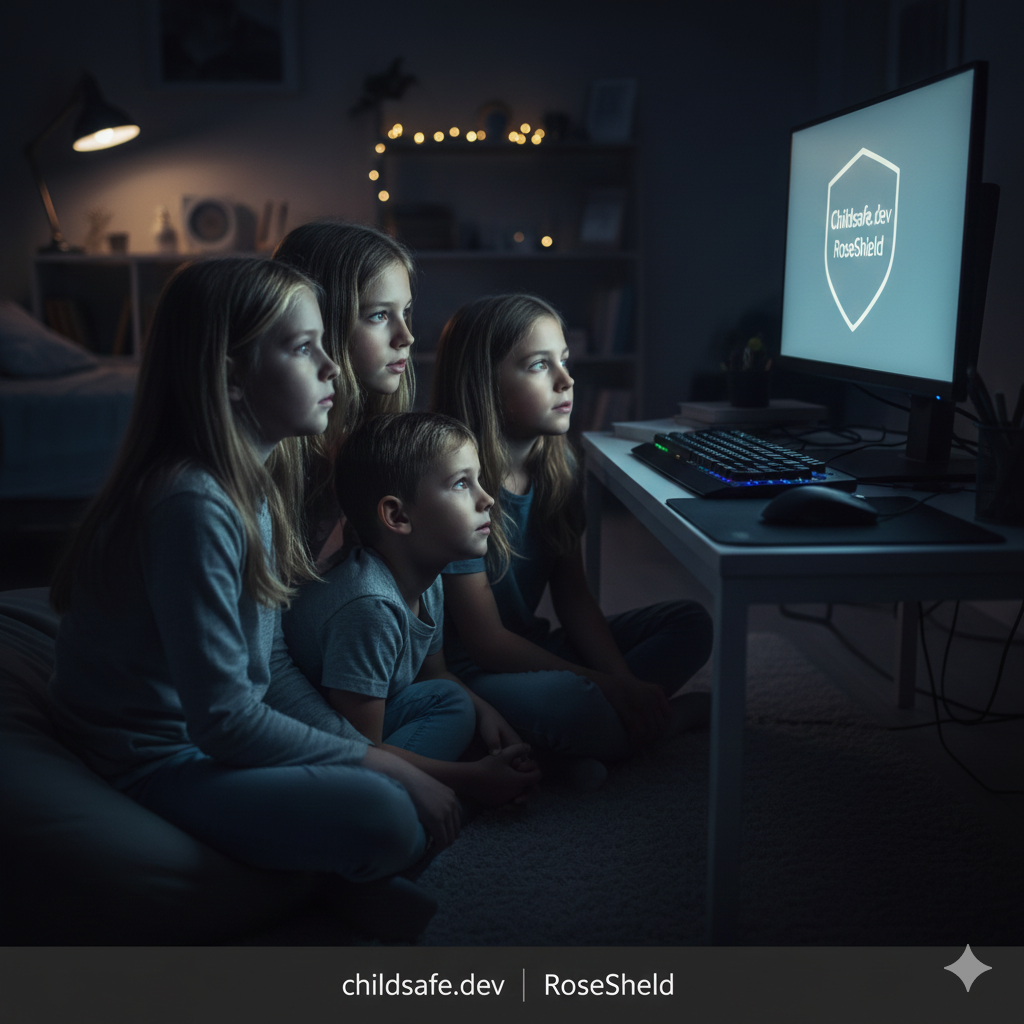
What this moment calls for is a different architecture of safety. ChildSafe.dev and RoseShield were designed precisely for the world this research describes. Instead of depending on parental oversight or after-the-fact moderation, they use on-device AI to detect risk patterns in real time—before harm is created, shared, or escalates. Because analysis happens on the device, privacy is preserved. Children are not monitored; risk is identified contextually and addressed at the moment it matters.
This is the critical shift the EE findings point toward: safety must move from external control to embedded prevention. Protection cannot rely on parents outsmarting teens, or platforms playing catch-up after harm has occurred. It must be designed into the digital experience itself—quietly, ethically, and consistently.
The research is clear. Kids are navigating a digital world far more complex than the tools we’ve given families to manage it. Protecting children online is no longer about seeing everything. It is about designing systems that intervene before children need to hide at all. ChildSafe.dev and RoseShield represent that next generation of protection—safety that travels with the child, respects their growing independence, and meets risk where it actually happens. That is what modern duty of care demands.



Privacy first child protection technology. Keeping children safe online without compromising privacy.


© 2025 ChildSafe.dev · Carlo Peaas Inc. All rights reserved.
Built with privacy-first, PII-free child protection.


